
Shhhhh
The Moment Speaks For Itself

Hold The Line
If you’ve been reading this newsletter for a while, you know I was a musician long before comics ever entered the picture.
Before I was drawing pages, I was writing songs, singing in bands, and spending an unhealthy amount of time in rehearsal and recording studios. I took classes in composition and lyric writing and read anything I could find about songwriting. But like most creative fields, some of the most useful lessons didn’t come from books. They came from chatting with other musicians in the trenches.
One of those conversations stuck with me.
I was seventeen, rehearsing in a studio on Long Island, when I struck up a conversation with another singer-songwriter named Carl Allocco. Carl was a few years older than me and on the verge of signing with RCA. We bonded over The Beatles, then drifted into talking about songwriting and the strange little tricks musicians use to make a song stick in your head.
Carl mentioned a technique I had never heard of before. I’ve heard it called by many names since, but I ended up calling it:
The Rosanna Principle.
Why?
Give me a sec.
The idea sounded almost backwards. Once a listener knows the hook of a song, the thing they’re waiting for is hearing it again. So you build the music up to the hook. The band hits the chords. The rhythm section drives toward the moment…
…and then you don’t give it to them.
The singer drops out.
You make the listener sing it.
In their head. Sometimes out loud if you’re really good at it.
And because the listener just completed the hook on their own, it lodges even deeper in their brain.
That’s the trick.
They didn’t just hear it.
They participated in it.
How many times have you sung along with a song you know and found yourself coming in too early on the chorus?
That’s not an accident.
Of course, there’s a catch.
For this to work, the hook has to be good enough that people actually want to sing it.
Toto was a master of this.
“Rosanna” forces you to sing “Rosanna, yeah” while the singer is nowhere to be found, and “Hold the Line” drives the hook home over and over again during that extra-long guitar solo.
The music implies the hook.
Your brain supplies the rest.
And you’re singing along whether you meant to or not.
That exact same principle applies to visual storytelling.
Sometimes the most powerful moment on the page…
…is the one you don’t show.
Because if you’ve built the pattern correctly, the audience feels the missing beat even more strongly than if you had delivered it outright.
They complete it themselves.
That’s a tremendously powerful tool.
Because now the story is happening in them, not just in front of them.
That’s The Rosanna Principle in visual form.
And it leads us to the next invisible tool in storytelling.
Absence.
The Invisible Language of Visual Storytelling
Part 10: The Sound of Silence
The strange thing about silence is that it isn’t empty.
It’s active.
Silence asks the audience to lean in. To fill the gap. To participate.
That’s why it’s powerful.
And that’s why most storytellers are terrified of it.
They keep adding.
More dialogue.
More reaction shots.
More explanation.
More movement.
More reassurance that the audience won’t miss the point.
But silence is one of storytelling’s sharpest tools.
What You Withhold Hits Harder
When you withhold something the audience expects, they don’t go blank.
They step in.
That’s the key.
If a character says, “I love you,” and the recipient of that declaration doesn’t respond, the silence becomes part of the scene.
If you cut away from the punch and show the aftermath instead, the reader completes the hit internally.
If a page has negative space where clutter could have lived, that emptiness starts to carry pressure.
Absence isn’t missing information.
It’s activated information.
That’s The Rosanna Principle at work.
The audience supplies what you withhold, and because they supply it, the moment hits harder.
Silence Is Dialogue
One of the biggest mistakes young storytellers make is believing that if something important happens, somebody has to say it.
Not true.
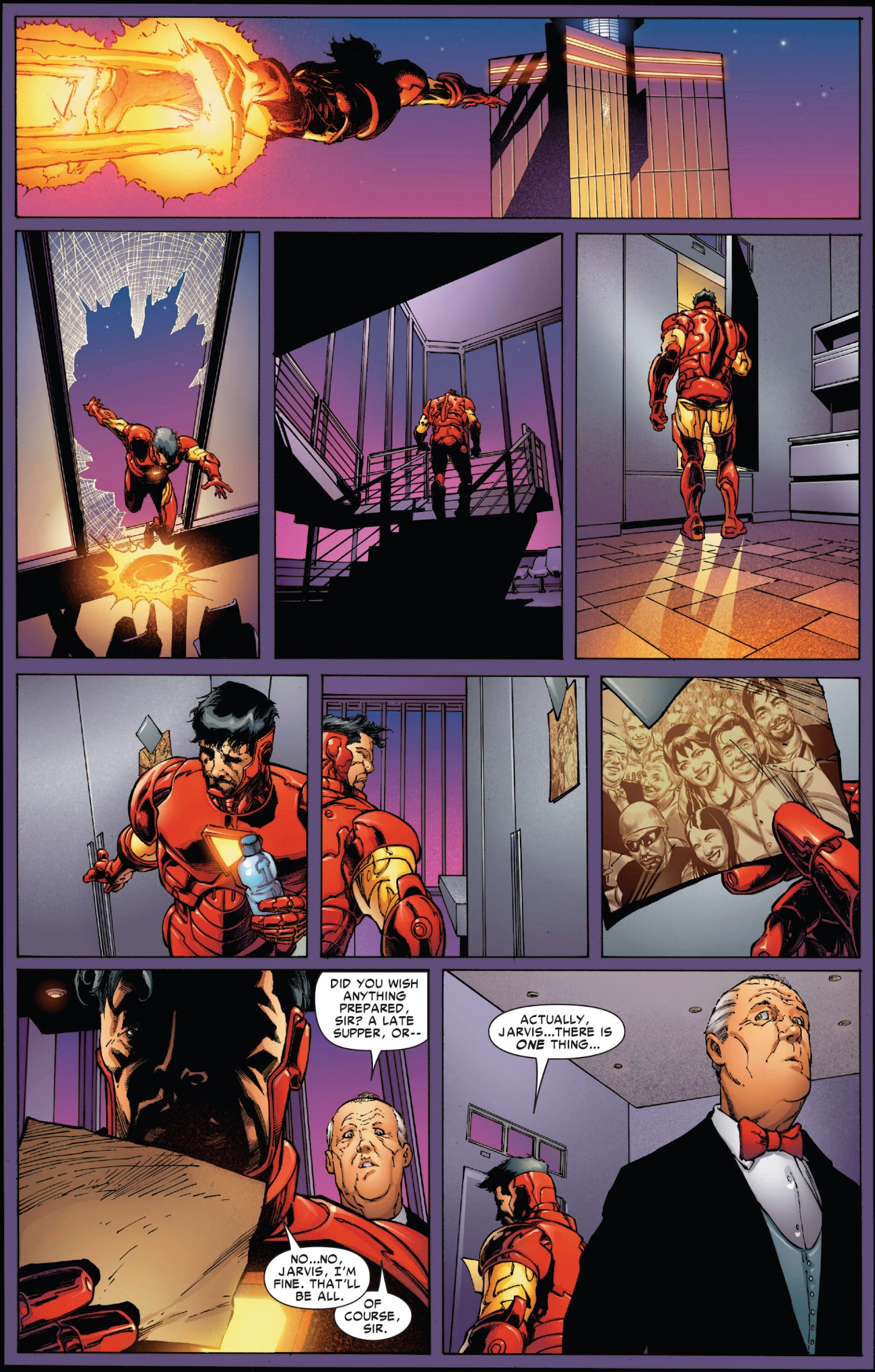
Some of the strongest moments in comics happen when nobody speaks.
A look across a room.
A hand that doesn’t reach back.
A character seated alone after the fight is over.
Silence turns the reader into an interpreter.
They’re not just consuming the scene.
They’re reading it.
And that participation creates investment.
What You Don’t Show Does the Work
This is one of the oldest tricks in storytelling because it works.
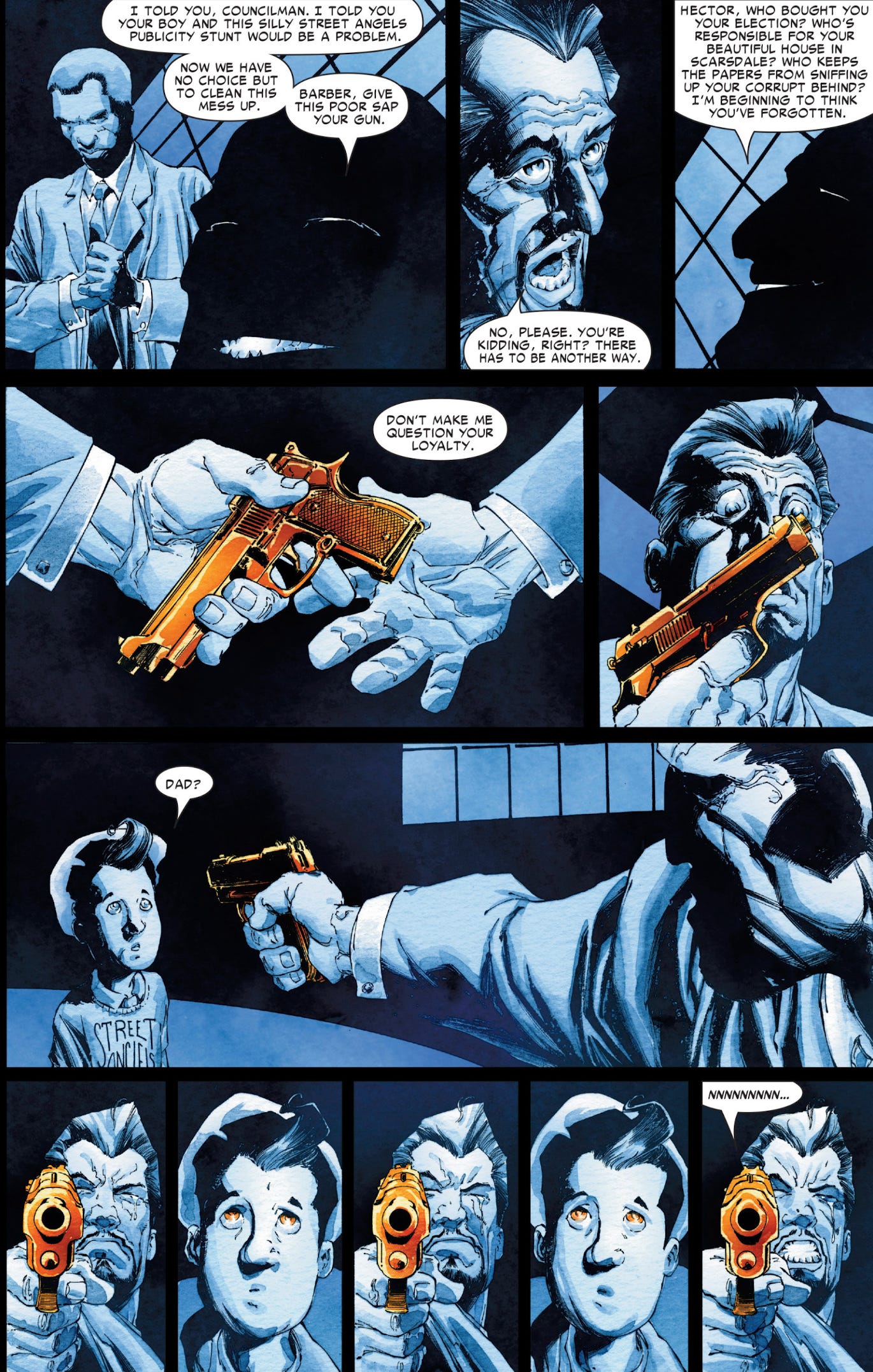
You don’t always show the thing.
Sometimes you cut straight to the broken glass on the floor after it happened.
Sometimes you show the breath before it.
Sometimes you show the face reacting to it.
Why?
Because the mind fills gaps violently.
Often more powerfully than the literal image ever could.
You are not giving the audience less.
You’re giving them a role.
And when the role is clear, they step into it.
The Space Is the Story
A lot of people think negative space is just design. Good composition. Nice breathing room.
That’s true.
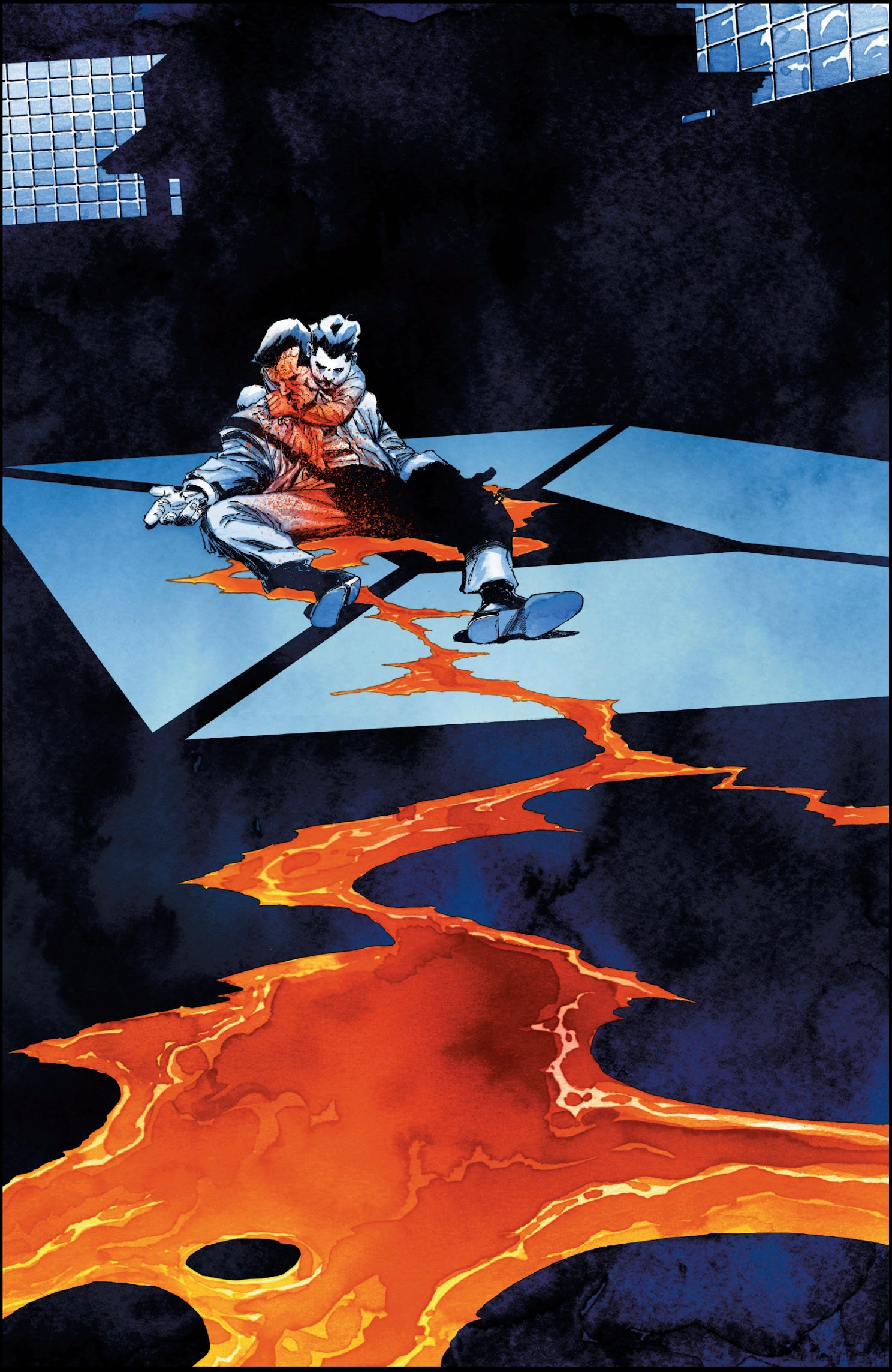
But in storytelling, negative space can also become tension.
A small figure isolated in a large empty panel does not just read as “design.”
It can read as:
Loneliness.
Distance.
Shock.
Stillness.
Aftermath.
The empty space becomes emotional space.
That’s why silence on a page is never just visual.
It’s psychological.
Clarity Makes Withholding Work
This part matters.
Silence only works when the storytelling is clear.
If the reader understands the setup, withholding becomes participation.
If they don’t, it becomes confusion.
Confusion breaks trust.
Silence builds it.
So don’t confuse omission with mystery.
Mystery is controlled.
Omission without clarity is just missing information.
The Loudest Beat Is Silence
This is the same lesson as size, flipped inside out.
The loudest moment in the scene is not always the one with the most motion.
Sometimes it’s the still panel after the truth lands.
Sometimes it’s the empty chair.
Sometimes it’s the beat where nobody answers the question.
That’s silence functioning as sound.
The audience leans toward the gap.
And that lean is emotional movement.
Here’s a scene I labored over from Amazing Spider-Man #545, the final issue of One More Day.
This is the moment when Peter and MJ are making the biggest, hardest decision of their lives.
There was so much that could have been said in that four-page sequence.
I chose to let the silence do the work and let the reader fill in the blanks.
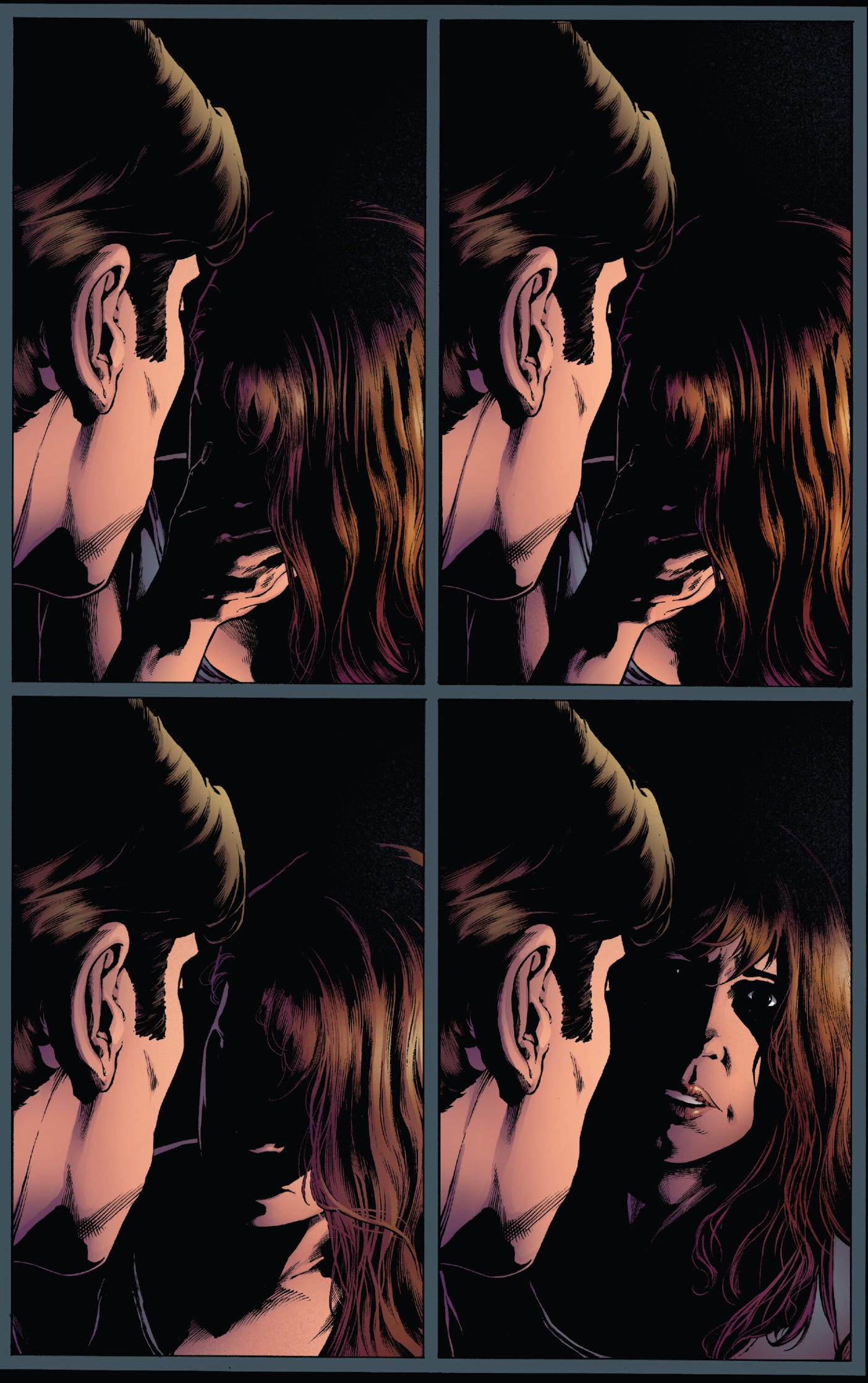
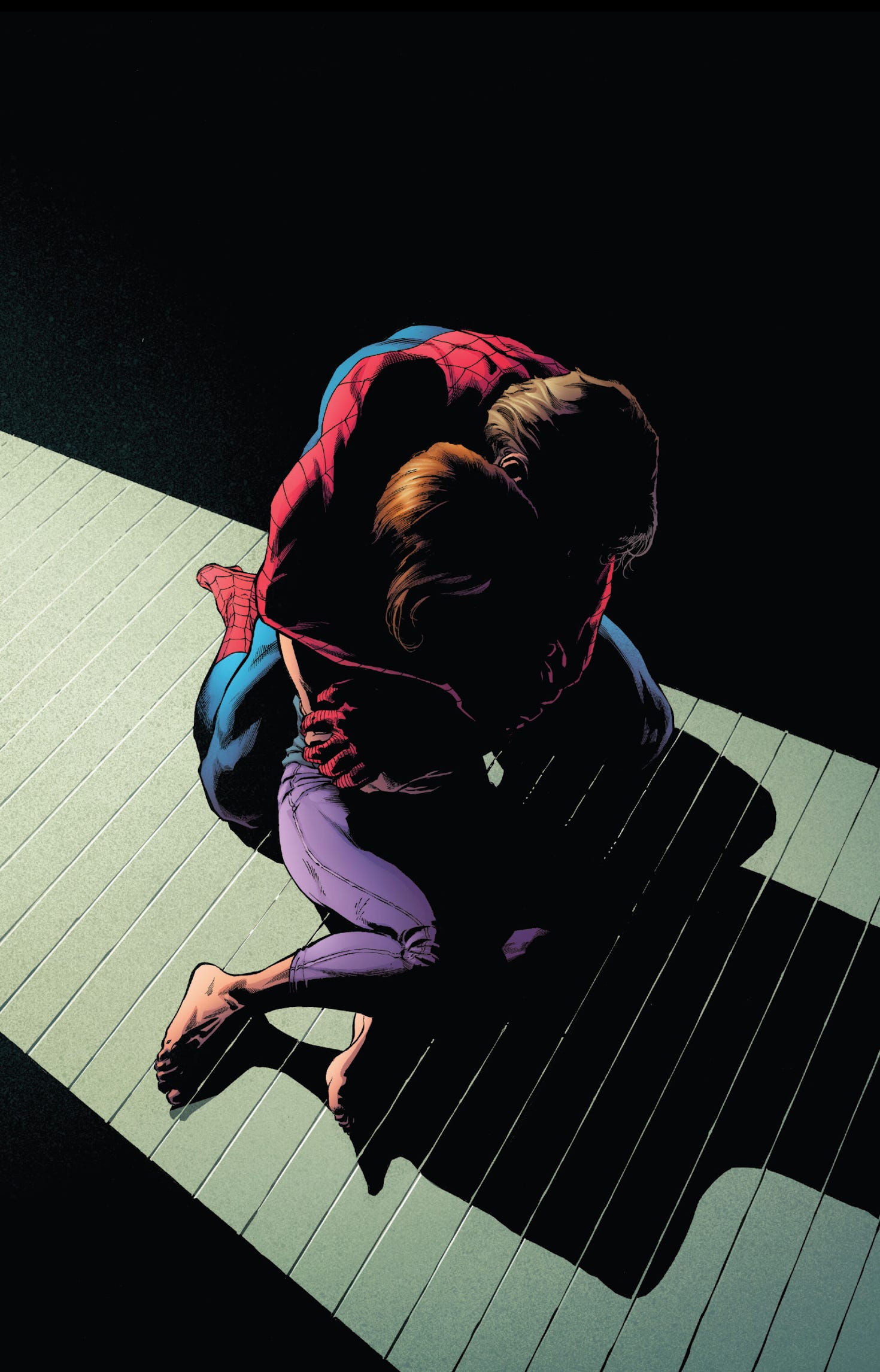
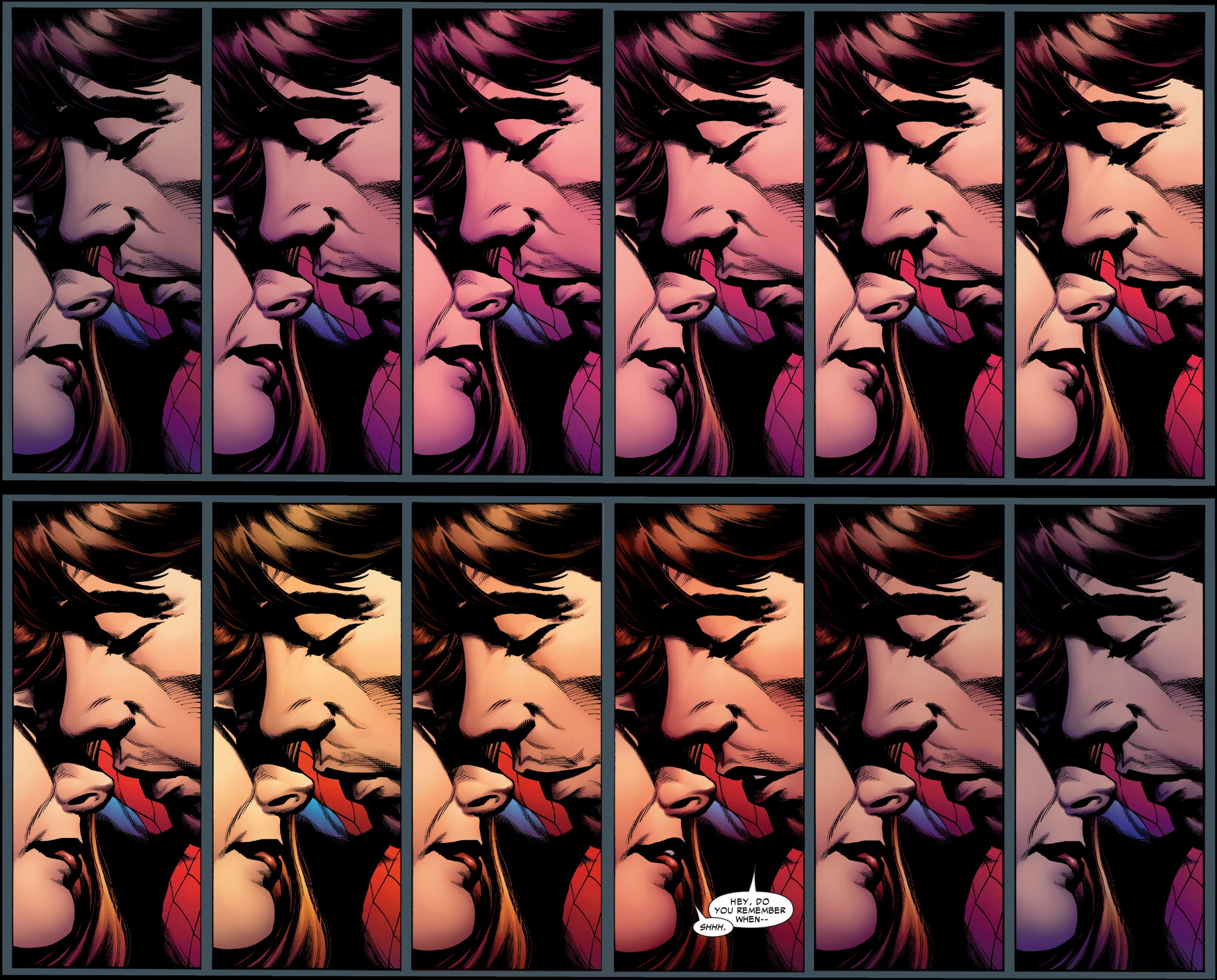
This final double-page spread would have been the perfect spot for them to reminisce and talk through the life they’d built together. But in the end, there really were no words for what they were going through. Instead, they silently held each other from sunup to sundown. And in that one little moment when Peter tries to break the silence, MJ stops him, because everything that needs to be said already has been.
Know When Not to Speak
That may be the biggest lesson in this chapter.
A page is not only what you show.
It’s what you make the reader carry.
Rhythm taught us that panels are beats.
Size taught us that panels have volume.
Silence teaches us that what isn’t there can still be heard.
That’s when storytelling stops being arrangement and becomes participation.
Now the reader is no longer just receiving the story.
They’re completing it.
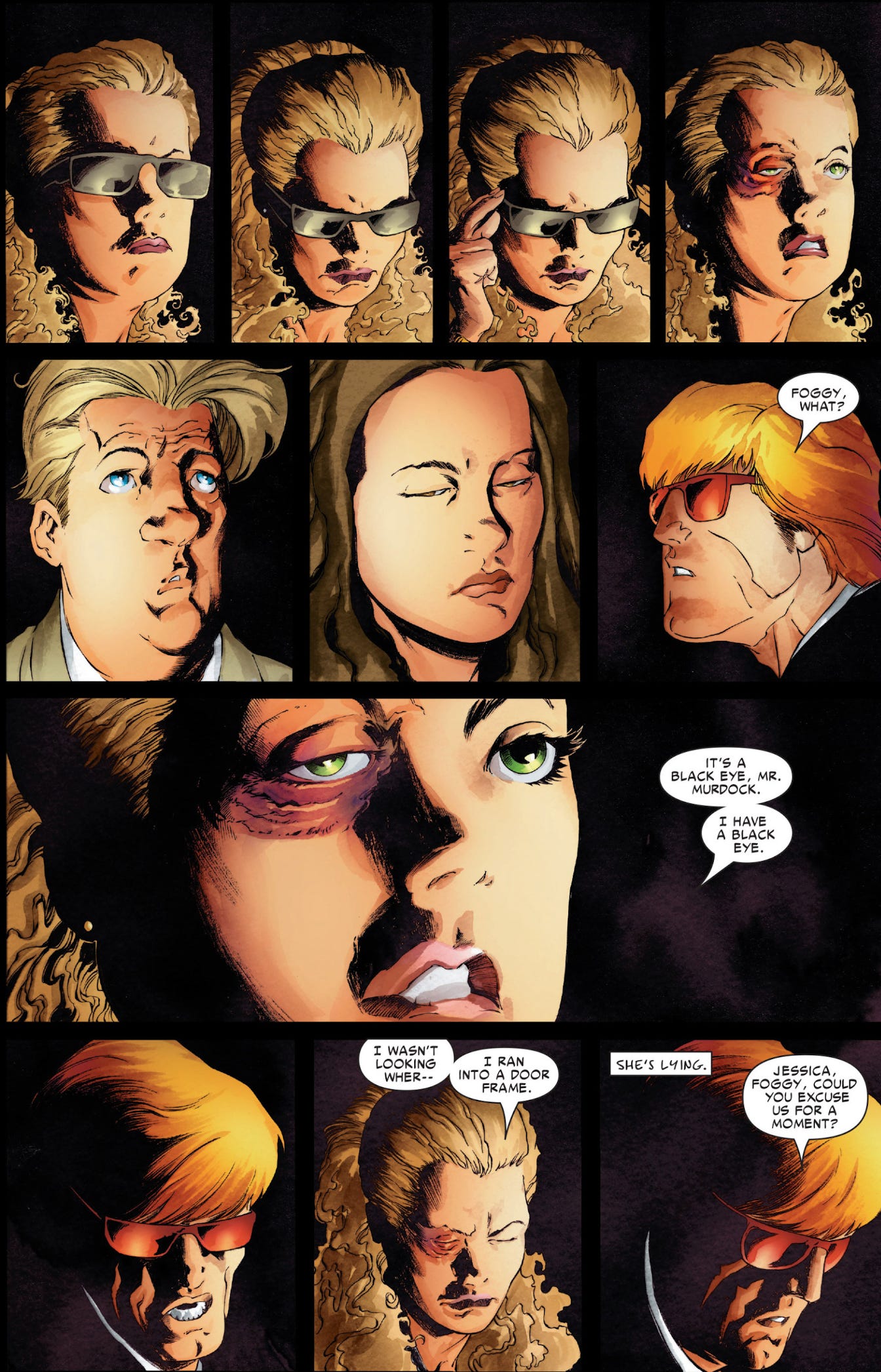
In this page from Marvel Knights: The World To Come issue 3, you can tell how Queen Monica Lynne feels about this transaction without her having to say a word.
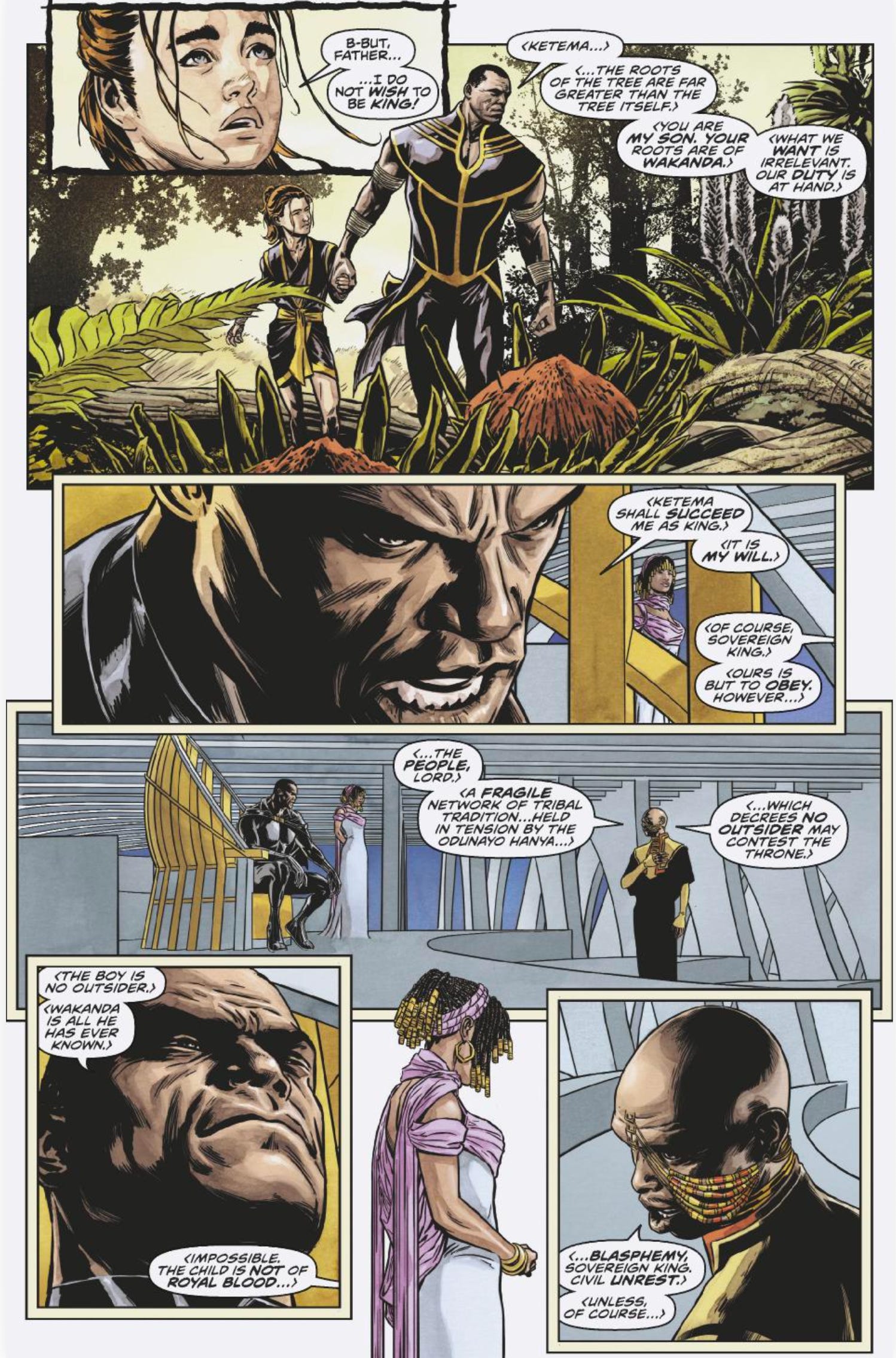
That takes confidence because silence feels risky.
You worry the audience won’t get it.
But when someone like Christopher Priest does it, it doesn’t weaken the moment.
It amplifies it.
Because the audience steps into the gap and carries it the rest of the way.
That’s resonance.
If you’ve done your job right, you don’t need to show the moment.
You need to trust the audience to feel it.
Next Week
In just 7 days, we flip this on its head.
We’ve been talking about withholding.
Now we talk about release.
Because knowing when not to show something is only half the craft.
Knowing exactly when to reveal it, that’s where the power really lives.
Songs of Love
One last thing before I leave you to mull over what we just discussed.
Carl and I have remained friends through the years. I consider him one of my musical mentors, and we even worked on a song together a few years back.
He’s a great songwriter and an even greater human being. He’s now celebrated his 25th year of doing incredible work with the Songs of Love Foundation, writing personalized songs for children and seniors facing health or emotional challenges.
If you believe in the healing power of music, please donate.
It’s one of the purest examples I’ve ever seen of how powerful music can be.
Thanks for reading.
You’re AMAZING!
JQ
Valuable lesson - it's whats in the GAP. Sometimes it doesn't need to be filled... because your audience deserves the time to see themselves in the GAPS. Powerful lesson from music that can be used in so many places. Public speaking included. ;-)
The panel right before Peter says "Hey, do you remember..." that's the magic one!
Another benefit of the comics medium, you can get away with more unspoken subtlety, bc the reader has total navigational control of the narrative.
Great stuff as always!