
I'm A Control Freak
And that's a problem.

The Joe Q World Tour Rolls into The Land

Hell’s yeah! I’ve never been to Cleveland, so I’m looking forward to this show and meeting all you Northeast Ohioans! I’ll be there all three days, but I don’t know my signing times yet. I’ll post those in Notes as soon as I get them.
But that doesn’t mean you can’t sign up in advance for “The Joe Quesada Experience” (not a tribute band). Sorry, that joke never gets old.
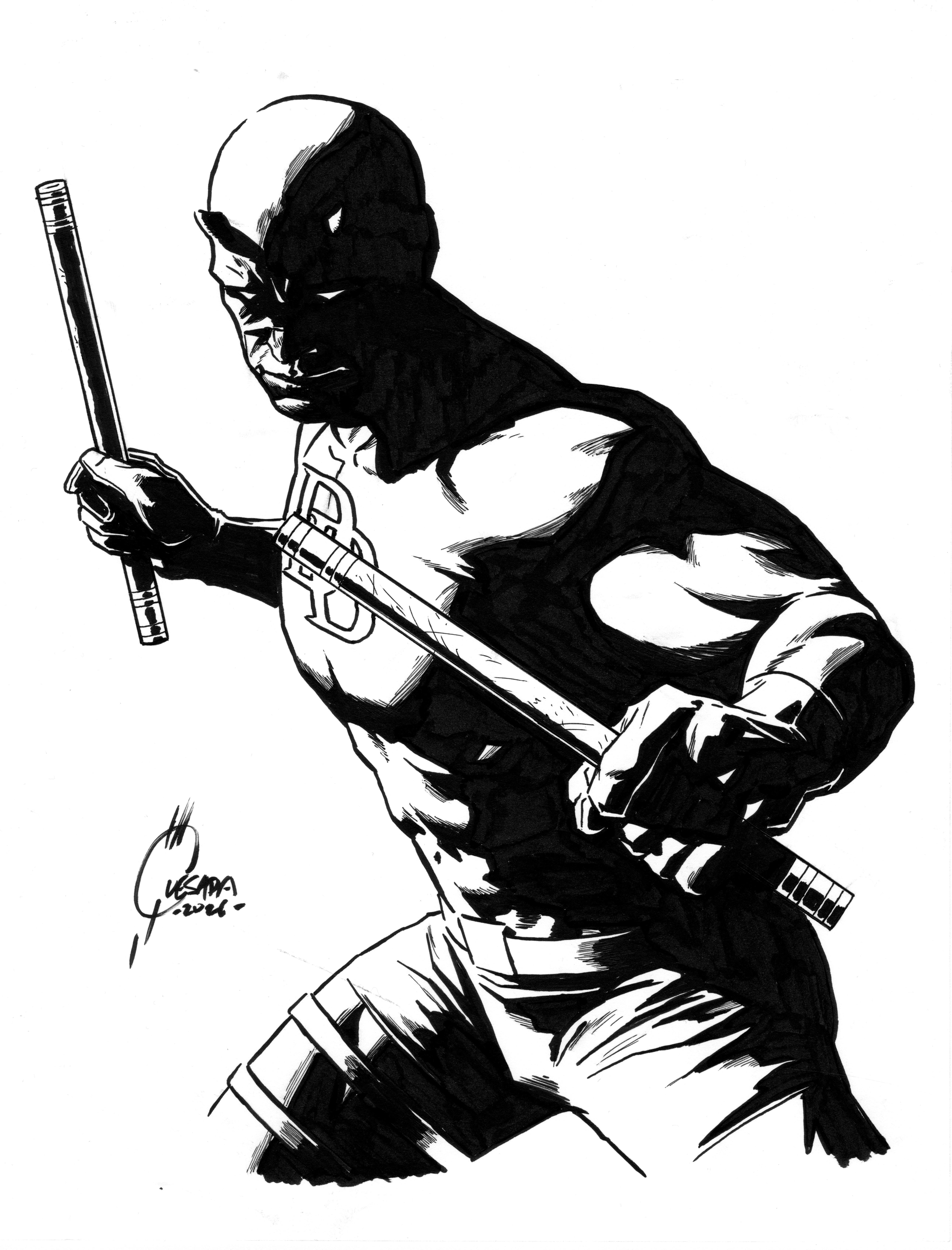
I’m only doing a limited number of sketches, and we’re almost sold out. If you’re interested, here’s one I just finished for some lucky Clevelander.
Look Deep Into My Eyes… You Are Powerless
Before we get into today’s lesson, there’s something every comic storyteller needs to understand.
You would think the biggest difference between comics and other visual storytelling mediums is motion.
It isn’t.
It’s time.
Time is the single greatest challenge a comic creator faces.
In film, animation, and television, the director controls time.
You sit in front of a screen, and the story unfolds at the pace the filmmaker dictates. The cut happens when they decide it happens. The reveal lands exactly when they want it to land.
In comics, the reader has all the power.
They decide how long to sit on a panel.
They decide how quickly they move to the next one.
They decide when the page turns.
Which means comic creators don’t truly control the clock.
We influence it.
We guide it.
We suggest it.
But ultimately, the reader holds the stopwatch.
So the question becomes:
How do you guide time when you can’t actually control it?
The answer comes down to three tools.
Tempo.
Volume.
Silence.
In music, those forces shape how an audience experiences a piece.
In comics, they shape how a reader experiences a story.
We just hide them inside panels.
A-One… And A Two…
Back in my Editor in Chief days, Klaus Janson would often stop by my office when dropping off artwork. I always loved those visits. Not just because Klaus has great stories, but because I usually walked away learning something new.
The thing about Klaus is that he’s a legendary artist and master storyteller who remains relentlessly curious. He’s always asking questions about process, methodology, and how people approach the work.
During one of those visits, Klaus mentioned how much he enjoyed my storytelling. Aside from being blown away by the compliment, it came with a question.
How did I approach the page?
How did I think about it?
How did I break it down?
At the time, I didn’t really have the vocabulary to explain it. The best I could do was offer what I assumed would be a confusing comparison.
I told him that before drawing, when I read a script…
I hear the story.
Coming from a musical background, when I read a script before drawing it, what immediately comes to mind is musical composition.
Klaus looked a little surprised.
Then he smiled and said that was exactly how he thought about storytelling too, because he also came from a musical background.
So we started comparing notes.
That conversation stuck with me, because it turned out I wasn’t the only one hearing it that way.
The structure of a comic page isn’t that different from the structure of music.
A symphony.
A pop song.
A comic page.
They’re built the same way.
They shape tempo.
They shape volume.
Sometimes the most powerful thing they do…
…is stop playing entirely.
This is my long-winded way of telling you we’re starting a new act in this series, and I’ll be leaning heavily on music as a metaphor.
Heck, it’s right there in the title.
ACT III — RHYTHM
The Invisible Language of Visual Storytelling
Part 8: Panels Are Beats
You can stage a room.
You can direct the eye.
You can place the audience exactly where you want them.
And still lose the reader.
Because storytelling doesn’t just happen in space.
It unfolds over time.
And in comics, time is invisible.
You can’t point to it on the page. You can only feel it.
That’s what panels do.
They don’t just divide action.
They measure time.
A panel is not just a picture.
It’s a beat.
And the moment you understand that, comics stop being illustration and start becoming music.
Beats
Panels Are Units of Time
Every panel on a page tells the reader one thing:
Stay here this long.
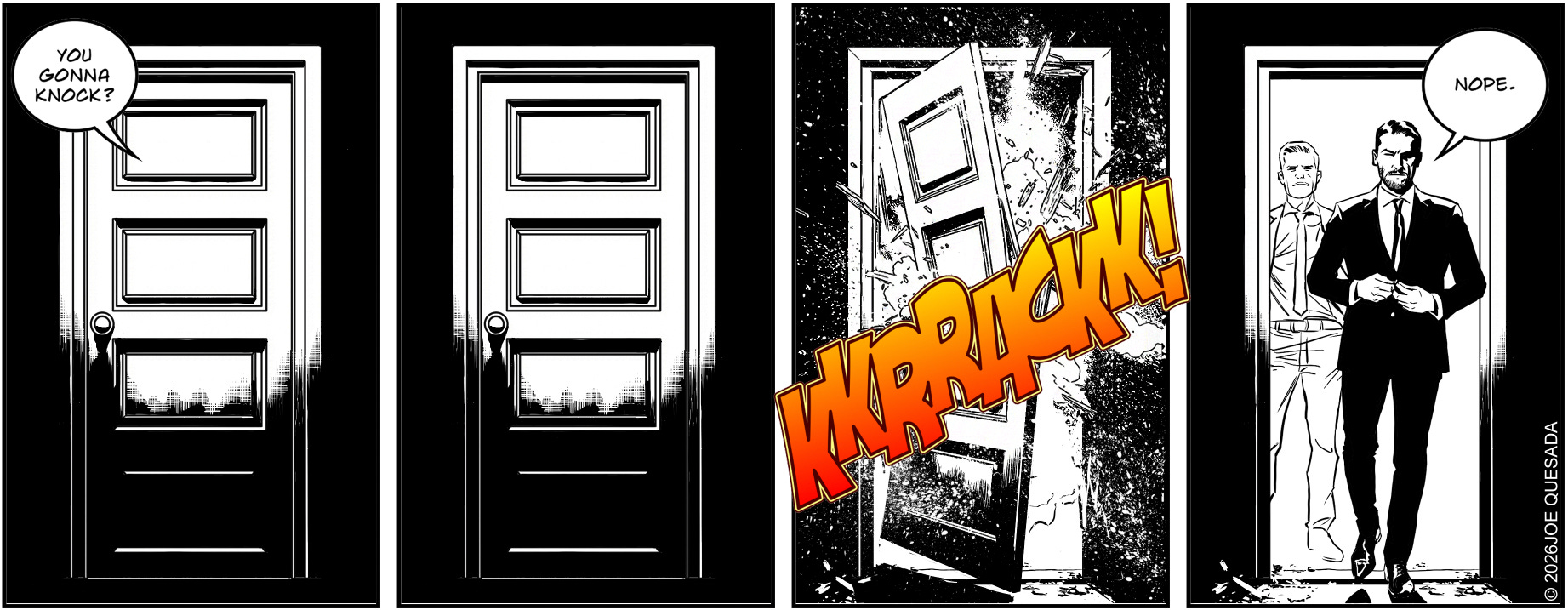
But the number of panels you use changes how long the reader experiences the moment.
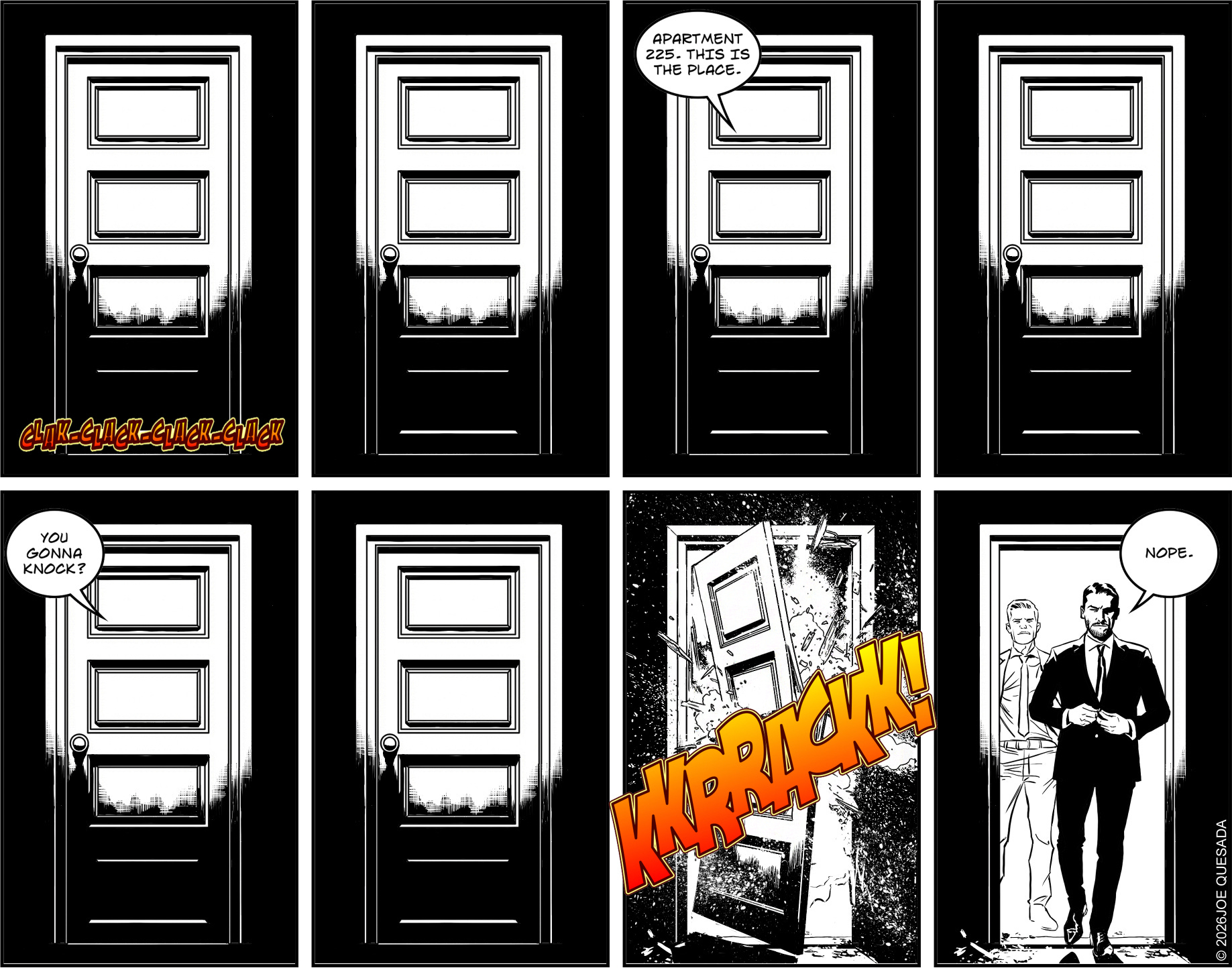
Break the same action into more panels, and the moment stretches.
The reader experiences hesitation, anticipation, and buildup before the door finally bursts open. In some cases, it can amplify humor.
Now watch what happens when we do the opposite.
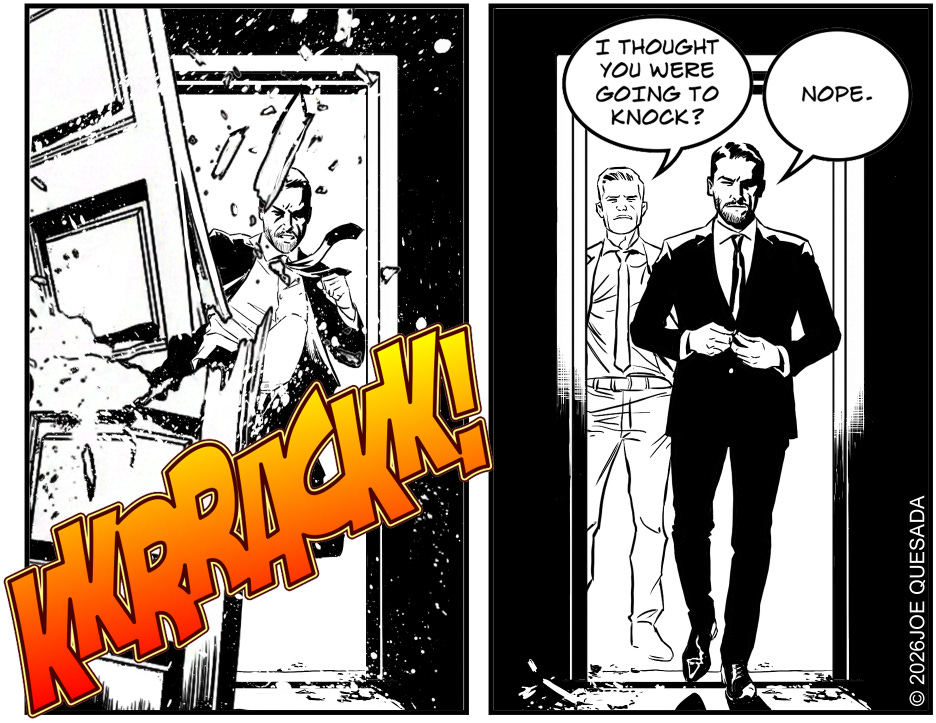
Remove the intermediate beats, and the moment happens almost instantly.
The door explodes open before the reader even settles into the scene.
Same action.
Different rhythm.
And that difference changes everything.
The panel isn’t just showing you what happens.
It’s telling you how long the moment lives and what you should feel.
Measures
If a panel is a beat, a page is a measure.
That means a page has rhythm.
A page with nine small panels moves differently than a page with three wide ones.
Nine equal panels create a steady tempo. Measured. Controlled. Metronomic.
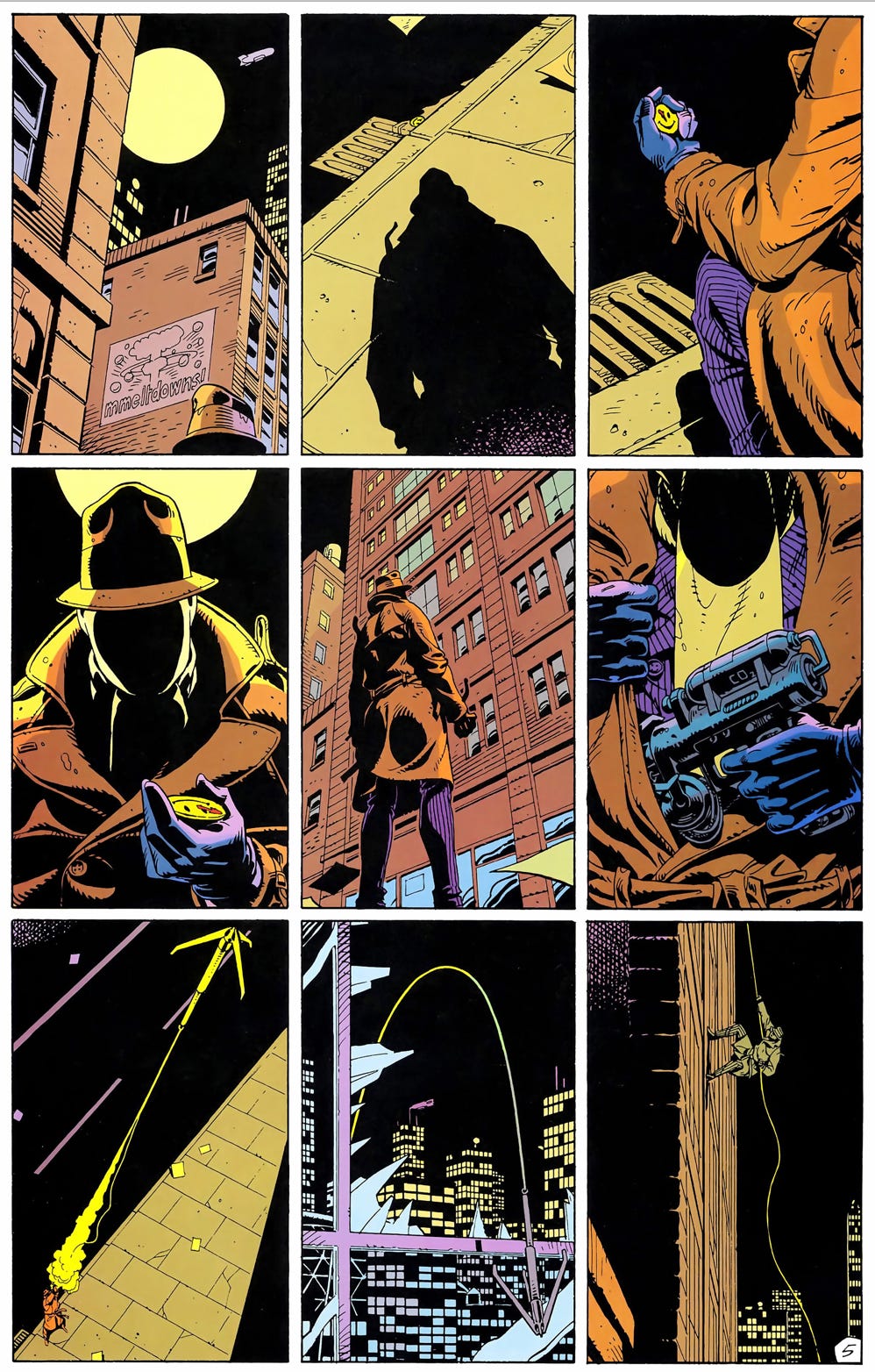
Can you hear it? Tik-tik-tik…
Alan Moore and Dave Gibbons’ Watchmen is a masterclass in controlling time.
Now watch what happens when they deviate from the nine-panel grid and add a long horizontal panel.
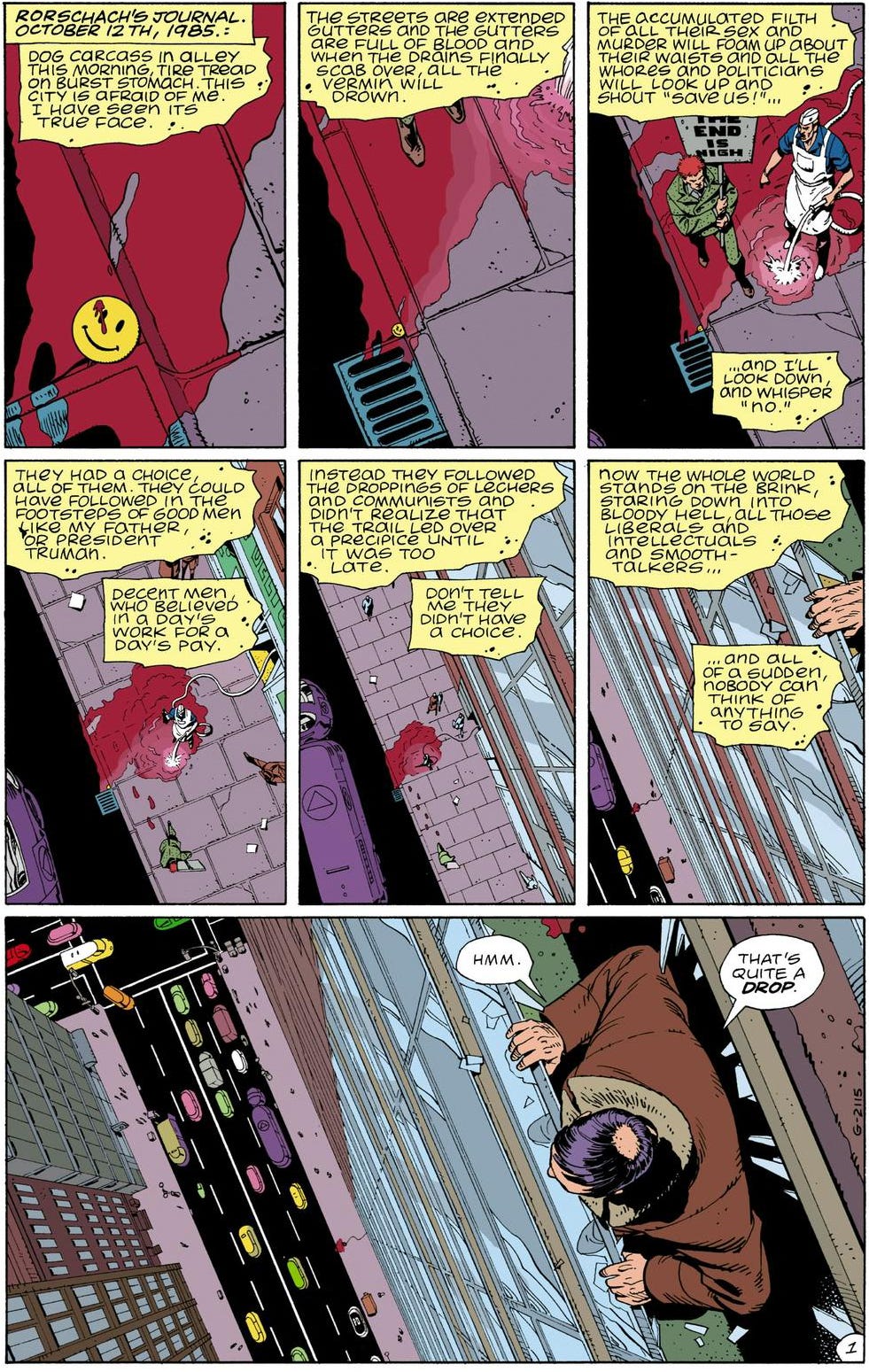
It’s like a sustained note.
Held.
Ringing out.
It’s saying: pause for a second and take this image in. It’s important.
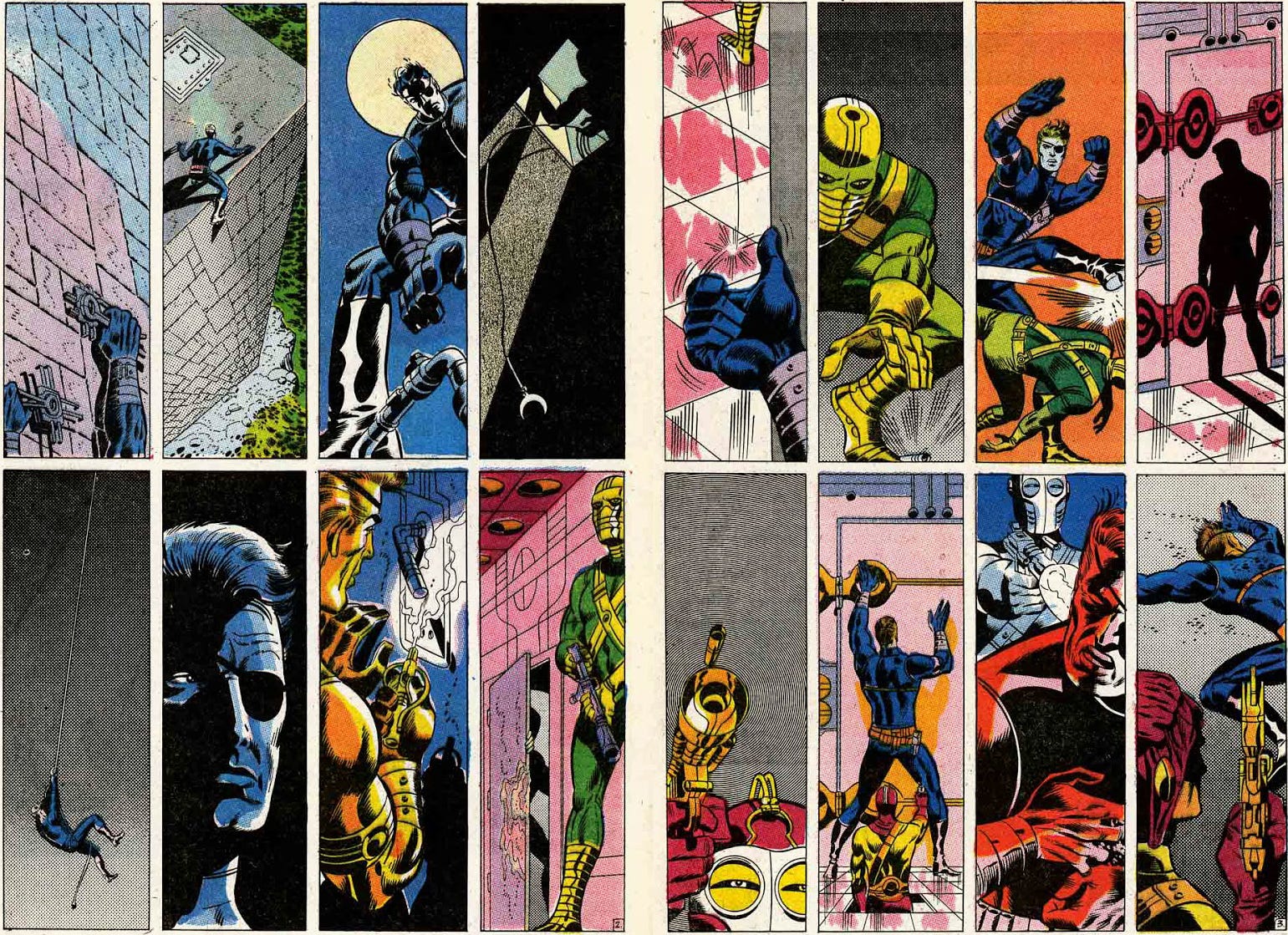
A page full of narrow vertical slices can feel nervous. Restless. Quick breaths.
In these two Nick Fury, Agent of S.H.I.E.L.D. pages by Jim Steranko, you can hear the clock ticking and feel Fury’s methodical pace.
And in this breathtaking spread from Steranko’s Outland adaptation, you can feel time shrinking, as well as the air supply.
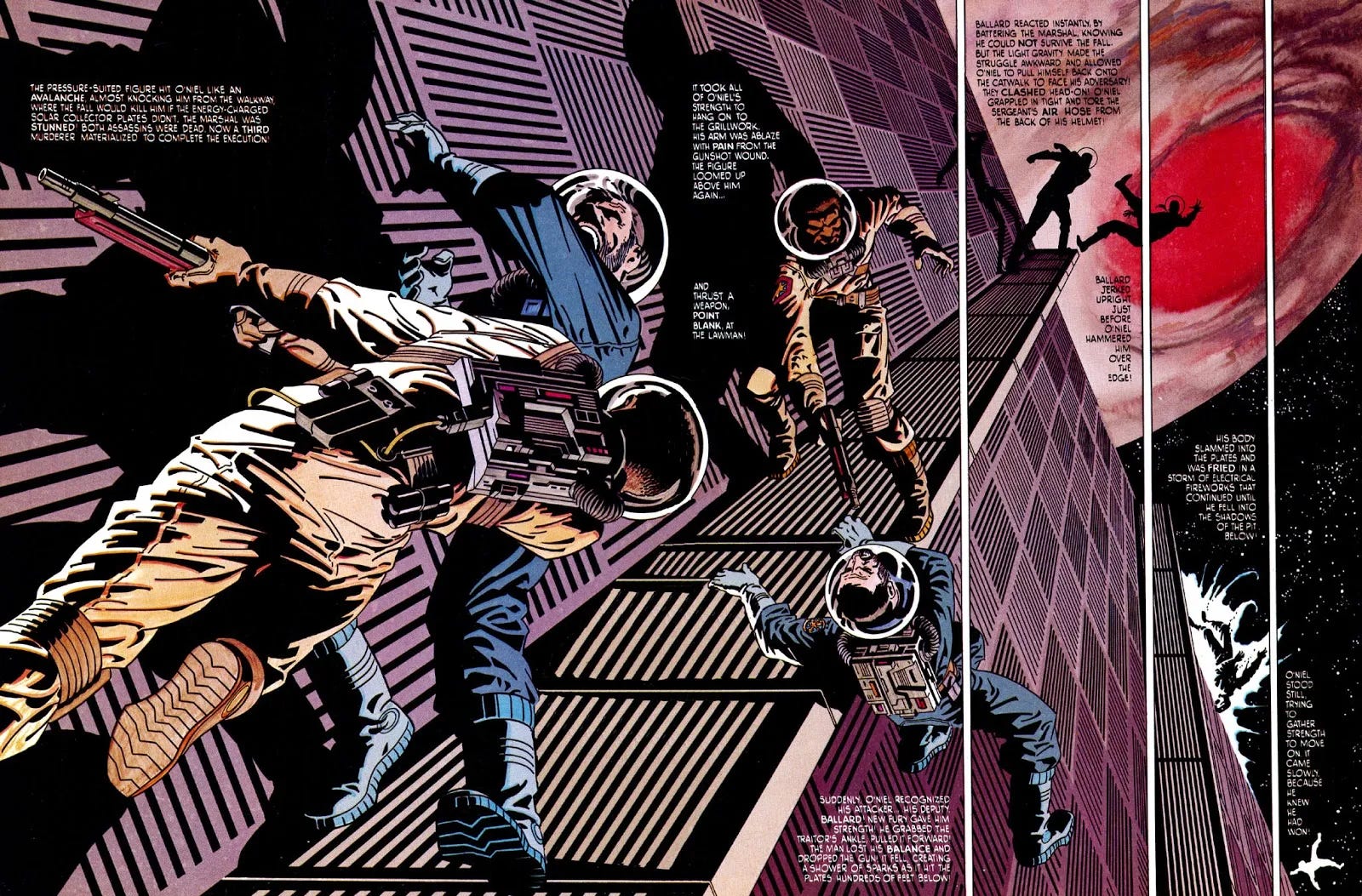
By contrast, two big panels feel slower, heavier, more deliberate.
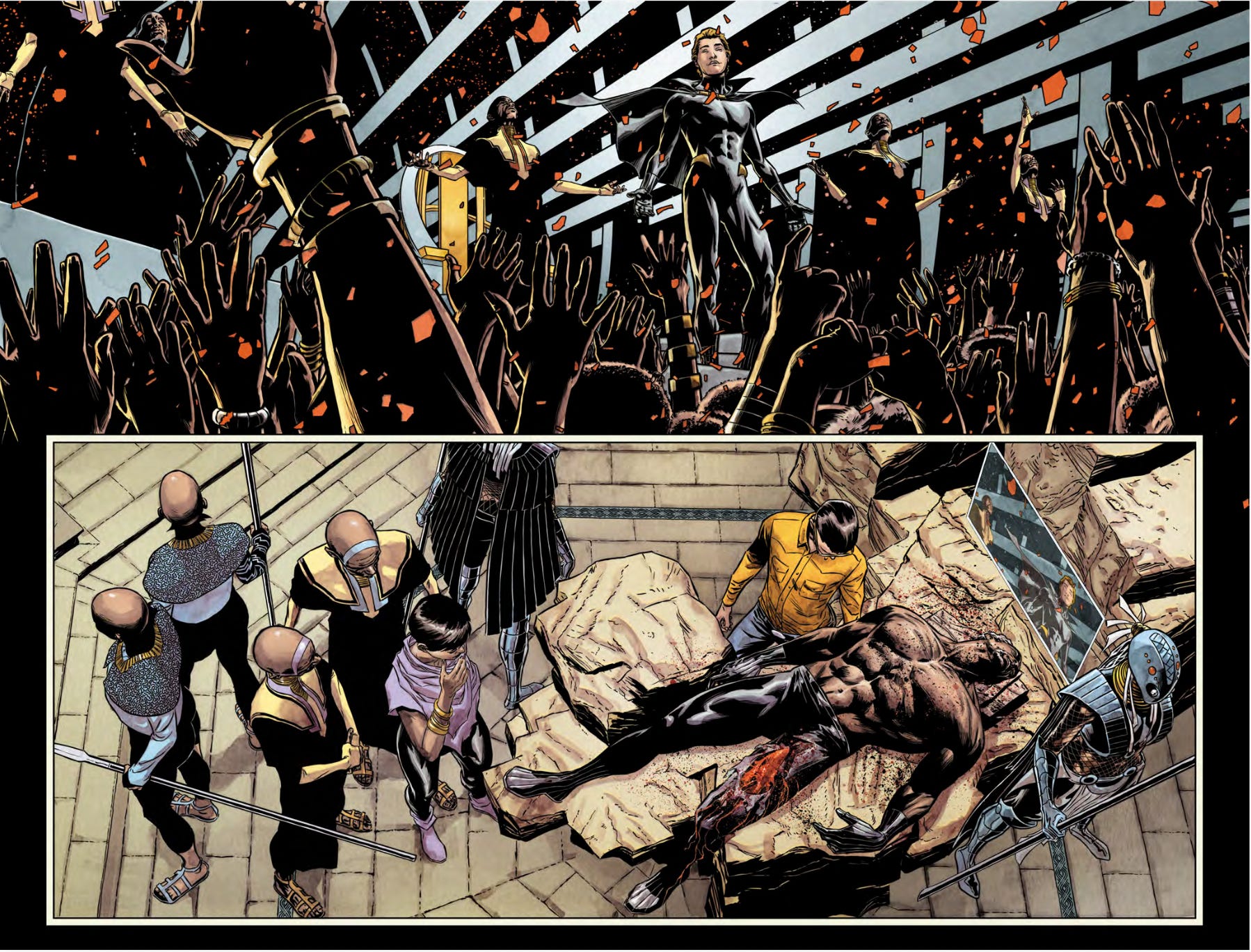
This is why two pages with the exact same dialogue can read completely differently.
The words may not change.
The tempo does.
And tempo changes emotion.
Rhythm Is Felt Before It’s Understood
Readers never say,
“This page has a nice tempo.”
They feel it.
They speed up.
They slow down.
They lean in.
They rush.
They pause.
Like music, rhythm works whether the audience can explain it or not.
Nobody needs to understand time signatures to know when a song drags.
Nobody needs to understand panel rhythm to know when a comic does.
More Panels Means More Story, Right?
This is where people get into trouble.
Young storytellers often confuse complexity with density.
They think more panels means more information. More sophistication. More value.
Not necessarily.
Sometimes more panels create precision.
Sometimes they just create traffic.
If every page is broken into tiny pieces, you don’t create rhythm.
You create sameness.
A song made entirely of sixteenth notes isn’t dynamic.
It’s exhausting.
The same is true of comics.
Rhythm depends on contrast.
Without variation, tempo becomes monotony.
Shhhhh… Just Listen
This is the shift.
You stop asking,
“Does this panel look good?”
And start asking,
“How does this page sound?”
Does it move like a march?
A sprint?
A slow burn?
A hesitation?
A stumble?
A held breath?
If you can hear the page, you’re thinking rhythmically.
And once you start thinking rhythmically, panel count stops being decoration.
It becomes timing.
That’s when comics become music.
Hold… Hoooold… Hold the Line!
Before you experiment, before you explode the page, before you get fancy with fragmentation and splashy layout tricks…
show yourself you can hold rhythm.
Show yourself you can make a simple page sing.
Show yourself you understand beats.
Anybody can throw fireworks at a page.
Far fewer storytellers can hold a reader with a clean, simple sequence that moves at exactly the right speed.
Because rhythm isn’t about complexity.
It’s about control.
And once you can control rhythm consistently, you’ve earned the right to go bigger.
Because now your choices mean something.
The Work No One Sees
At this point in the series, we’ve talked about space.
Where the characters stand.
Where the audience stands.
Now we’re talking about pulse.
Panel count is tempo.
Panel layout is rhythm
The page is not just a container.
It’s a timing device.
And when it works, the reader never notices the engineering.
They simply feel the story moving at exactly the right speed.
That’s the job.
Next week, we turn up the volume.
Thanks for reading.
You’re AMAZING!
JQ
So true re. music. I’ve long felt the same, having been a song-writer and front man in a few bands over the years. The lettering is also like notes and tempo, which is (of course) a whole other thing. As always, great advice perfectly presented.
Wasn’t that Outland adaptation amazing? I love the film, but the comic was better. A bit of a lost masterpiece.
All artists are control freaks. The Watchman is an amazing example of timing. It's like listening to a symphony. Will Eisner's "Ten Minutes" is another perfect example.